


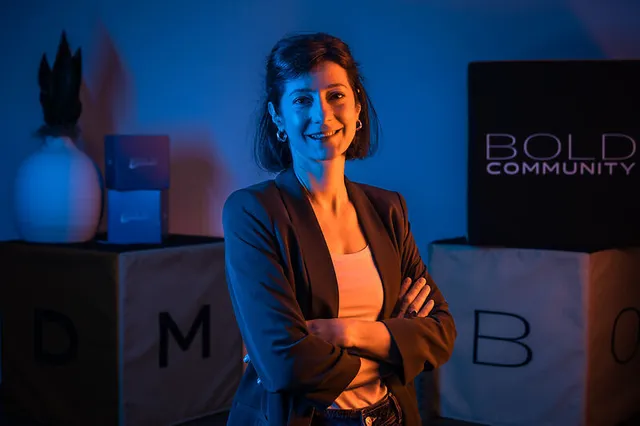
Four Questions for our BOLD Mind
What does innovation mean to you?
Innovation doesn’t always mean inventing something new. Often, it begins with listening to knowledge that has already there but hasn’t been given a place in the conversation. I have come to value insights found in overlooked practices, stories passed down through generations, or quiet observations made outside formal research. When we connect this kind of wisdom with scientific tools and translation, we build solutions that are not only smart but truly relevant to people’s lives.
What do you believe is the most important capability for companies to thrive in the economy of tomorrow?
Companies need to make room for real recovery. That means treating sleep and rest as a strategic resource, for clearer thinking, better collaboration and bolder ideas. People need an honest end to the day so they can show up with courage the next. Sustainable performance doesn’t come from pushing harder, but from knowing when to pause and how to support people to step out of their comfort zone again.
How can we leverage our collective strength to create a more prosperous future?
The HERENCIA project taught us that innovation often starts in unexpected places. A doctor in Colombian began listening to families from a small rural region around Medellin affected by Alzheimer’s. What emerged wasn’t just an insight into the earliest signs of Alzheimer’s but possibly even a path toward future treatment. That moment shifted our perspective. Real collaboration is not just about bringing knowledge and smart people together. It is about showing up with honesty and open-mindedness, sharing what didn’t work, how we struggled, asking better questions, and learning from people whose experiences may be nothing like our own. Sometimes the most important answers come from someone whose voice might otherwise be overlooked. If we can stay grounded, open, and truly interested in each other, across different cultures, sectors and ways of thinking, then we begin to unlock what moves us forward as a society.
Describe your project and work and what makes it so innovative?
Sleep is a human right and one of the most overlooked drivers of health and innovation. At ETH Zurich, I develop methods to understand and improve sleep in real life. In Colombia, I co-lead HERENCIA, using sleep and arousal physiology to detect the earliest signs of Alzheimer’s. Underneath it all is a clear aim: to bring science closer to where it matters most - into everyday lives.


